Good Dragons in the East and Bad Ones in the West
April 28, 2010
Do you recall story time when you were little and the tales of raging fire-breathers storming towns and eating man, woman, and children alike, only to be destroyed by a handsome, valiant knight in shining armor? And, of course, the sweet young maiden who had just been sitting around all her life wishing for this hero to come and rescue her.
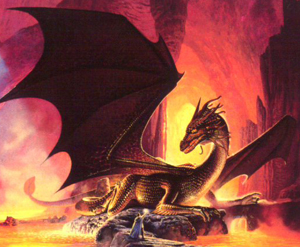
My childhood was jam-packed of damsels in distress and unruly dragons. It was more than once that I asked my dad to look under the bed or in my closet to be certain that there were no beasts in there.
When I was a tiny bit older, I learned about Hercules in Greek and Roman Myth. Hercules, the son of Zeus and a mere mortal, slew the Hydra, the nine-headed serpentine dragon.
In college, I read Beowulf. Again in this story we discover the greedy, evil beast of a dragon failing against our strapping, honorable hero.
Even motion pictures like Reign of Fire and Dungeons and Dragons portrayed most of the mystical beasts as brutal, man-eating (and burning) creatures. And you can’t overlook Godzilla, although many will declare that he was some variety of dinosaur/iguana, but at least one of his enemies was a dragon.
In these stories, no child, woman, or city was safe from the wrath of a dragon.
However, while watching Pete’s Dragon and Puff the Magic Dragon, I was introduced to a different variety of dragon. A friendly, peaceful one. I saw more of this kind of dragon in The Never Ending story and Dragonheart (both I and II). These creatures were nothing like the types I had studied about. So where did they come from?
The short answer is they came from the East. Traditionally in Eastern culture, in particular in China, dragons have been revered and honored. In the East (as well as a number of other philosophies such as Feng Shui, Celtic, Draconia Wicca, Gnostic, and Alchemy), the dragon symbolizes a supreme being offering hope, courage, and fortunateness. It is also a symbol of transformation, personal and spiritual quest, and wisdom.
Where in the tales I had heard before dragons are guards of treasures and prisoners, in this new philosophy they are guards of not only people and valuables, but of spiritual perfection, itself. Yet every dragon, Eastern or Western, friend or foe, is a symbol of power.When I glance around the room I’m sitting in, I see a resin fantasy dragon statue of two creatures viciously fighting. Upon seeing this figure, I don’t think of evil, instead I think strength and power. On the opposite side of the room (on the east side per Feng Shui guidelines) is a Chinese dragon carved out of a dark wood-it makes me feel peaceful.
Dragons are often portrayed as fierce, fire-breathing creatures that are bringers of destruction and will take down anything in their way. We see this in tales and literature and films in both Western and Eastern background. However, when we think about it, we can also come up with examples of dragons as protector or harbinger of luck. What do dragons indicate to you?
My childhood was jam-packed of damsels in distress and unruly dragons. It was more than once that I asked my dad to look under the bed or in my closet to be certain that there were no beasts in there.
When I was a tiny bit older, I learned about Hercules in Greek and Roman Myth. Hercules, the son of Zeus and a mere mortal, slew the Hydra, the nine-headed serpentine dragon.
In college, I read Beowulf. Again in this story we discover the greedy, evil beast of a dragon failing against our strapping, honorable hero.
Even motion pictures like Reign of Fire and Dungeons and Dragons portrayed most of the mystical beasts as brutal, man-eating (and burning) creatures. And you can’t overlook Godzilla, although many will declare that he was some variety of dinosaur/iguana, but at least one of his enemies was a dragon.
In these stories, no child, woman, or city was safe from the wrath of a dragon.
However, while watching Pete’s Dragon and Puff the Magic Dragon, I was introduced to a different variety of dragon. A friendly, peaceful one. I saw more of this kind of dragon in The Never Ending story and Dragonheart (both I and II). These creatures were nothing like the types I had studied about. So where did they come from?
The short answer is they came from the East. Traditionally in Eastern culture, in particular in China, dragons have been revered and honored. In the East (as well as a number of other philosophies such as Feng Shui, Celtic, Draconia Wicca, Gnostic, and Alchemy), the dragon symbolizes a supreme being offering hope, courage, and fortunateness. It is also a symbol of transformation, personal and spiritual quest, and wisdom.
Where in the tales I had heard before dragons are guards of treasures and prisoners, in this new philosophy they are guards of not only people and valuables, but of spiritual perfection, itself. Yet every dragon, Eastern or Western, friend or foe, is a symbol of power.When I glance around the room I’m sitting in, I see a resin fantasy dragon statue of two creatures viciously fighting. Upon seeing this figure, I don’t think of evil, instead I think strength and power. On the opposite side of the room (on the east side per Feng Shui guidelines) is a Chinese dragon carved out of a dark wood-it makes me feel peaceful.
Dragons are often portrayed as fierce, fire-breathing creatures that are bringers of destruction and will take down anything in their way. We see this in tales and literature and films in both Western and Eastern background. However, when we think about it, we can also come up with examples of dragons as protector or harbinger of luck. What do dragons indicate to you?
Posted by Dragon Figurines. Posted In : Religion, Shopping, Culture, Society, Spirituality- >Metaphysical

